Black nobility - Illuminati.
The “Black Nobility” are/were the oligarchic families of Venice and Genoa, Italy, who in the 12th century held the privileged trading rights (monopolies). The first of three crusades, from 1063 to 1123, established the power of the Venetian Black Nobility and solidified the power of the wealthy ruling class.
The Black Nobility aristocracy achieved complete control over Venice in 1171, when the appointment of the Doge was transferred to what was known as the Great Council, which consisted of members of the commercial aristocracy (among them the infamous de’Medici family). Venice has remained in their hands ever since, but the power and influence of the Venetian Black Nobility extends far beyond its borders, and today it is felt in every corner of the globe. (Don’t forget, our modern banking system originated in Italy.)
In 1204 the oligarchic family parceled out feudal enclaves to their members, and from this epoch dates the great building-up of power and pressure until the government became a closed corporation (don’t we know this from somewhere?) of the leading Black Nobility families. More of this can be found in the works of Dr. John Coleman, Black Nobility Unmasked World-wide, 1985; Conspirators’ Hierarchy: The Story of the Committee of 300, 1992.
The Black Nobility earned its title through dirty tricks, so when the population revolted against the monopolies in government, as anywhere else (aren’t we), the leaders of the uprising were quickly seized and brutally hanged. The Black Nobility uses secret assassinations, murder, blackmail, the bankrupting of opposing citizens or companies, kidnapping, rape and so on… hence their name.
Who are these families today?
Well, the most important ones are:
• House of Bernadotte, Sweden
• House of Bourbon, France
• House of Braganza, Portugal
• House of Grimaldi, Monaco
• House of Guelph, Britain (the most important one)
• House of Habsburg, Austria
• House of Hanover, Germany (the second most important one)
• House of Hohenzollern, Germany
• House of Karadjordjevic, Yugoslavia (former)
• House of Liechtenstein, Liechtenstein
• House of Nassau, Luxembourg
• House of Oldenburg, Denmark
• House of Orange, Netherlands
• House of Savoy, Italy
• House of Wettin, Belgium
• House of Wittelsbach, Germany
• House of Württemberg, Germany
• House of Zogu, Albania
• all the families you will find on the Windsor family tree
All the families listed are connected with the House of Guelph, one of the original Black Nobility families of Venice, from which the House of Windsor and thus the present Queen of England, Elizabeth II, descends. The Guelphs are so intertwined with the German aristocracy through the House of Hanover that it would take several pages to mention all their connections. All (almost) European royal houses originate from the House of Hanover and thus from the House of Guelph — the Black Nobility.
An example: the Hanoverian British King George I came from the Duchy of Luneburg, a part of Northern Germany, which had been governed by the Guelph family since the 12th century. Today the Guelphs (the Windsors) rule by dominating the raw materials market, and for years they have fixed the price of gold (a commodity they neither produce nor own). The House of Windsor also controls the price of copper, zinc, lead and tin. It is no accident that the principle commodity exchanges are located in London, England. Companies run by Black Nobility families are British Petroleum, Oppenheimer, Lonrho, Philbro and many many more.
Another Black Nobility family are the Grosvenors in England. For centuries this family lived, as most of the European families, on ground rent. Today the family owns at least 300 acres of land in the centre of London. The land is never sold, but leased on a 39 year leasehold agreement — the ground rent of the middle ages.
Grosvenor Square, in which the American Embassy is located, belongs to the Grosvenor family, as does Eaton Square. In Eaton Square apartments are rented out at 25,000 to 75,000 pounds a month (and that does not include maintenance costs). This is to give you an idea of the immense wealth the Black Nobility families garner from ground rents, and why families like the Windsors are not at all interested in industrial progress along with the excess population it supports.
This is the main reason why these ’noble’ families are behind most, if not all, of the wrong-headed pro-environmental movements of the world that ultimately and covertly (of course) aim to curb population growth. Prince Philip and Prince Charles are the most visible symbols of these movements, and both have often spoken with the utmost callousness about the need to rid the world of unwanted people.
The Black Nobility are the founders of the [modern] secret societies of our day from which all the others that are connected to the Illuminati originated from — the Committee of 300. The Club of Rome, the C.F.R., the R.I.I.A., the Bilderbergers, the Round Table… all originate from the Committee of 300 and therefore from the European Black Nobility families.
Co-operating with the European Black Nobility are American families like the Harrimans and the McGeorge Bundys. The House of Hanover seems to be German, but is really Jewish. So is the House of Habsburg.
So it wasn’t really the Germans who took over the British throne….
| House of Bernadotte | |
|---|---|

Arms of Bernadotte
|
|
| Country | Sweden, Norway |
| Founded | 1818 |
| Founder | Charles XIV John |
| Current head | Carl XVI Gustaf |
| Final ruler | Norway: Oscar II |
| Titles |
"By the Grace of God King of the Swedes, the Goths and the Wends" (used until 1973)
|
| Estate(s) | Sweden, Norway |
| Deposition | Norway: 1905 Dissolution of the union between Norway and Sweden |
The House of Bernadotte (UK:
/ˌbɜːrnəˈdɒt/
BUR-nə-DOT,
US:
/-ˈdɔːt,
Following the conclusion of Finnish War in 1809, Sweden lost possession of Finland, which had constituted roughly the eastern half of the Swedish realm for centuries. Resentment towards King Gustav IV Adolf precipitated an abrupt coup d'état. Gustav Adolf (and his son Gustav) was deposed and his uncle Charles XIII was elected King in his place. However, Charles XIII was 61 years old and prematurely senile. He was also childless; one child had been stillborn and another died after less than a week. It was apparent almost as soon as Charles XIII ascended the throne that the Swedish branch of the House of Holstein-Gottorp would die with him. In 1810 the Riksdag of the Estates, the Swedish parliament, elected a Danish prince, Prince Christian August of Augustenborg, as heir-presumptive to the throne. He took the name Charles August, but died later that same year.
At this time, Emperor Napoleon I of France controlled much of continental Europe, and some of his client kingdoms were headed by his brothers. The Riksdag decided to choose a king of whom Napoleon would approve. On 21 August 1810, the Riksdag elected Jean Baptiste Jules Bernadotte, a Marshal of France, as heir presumptive to the Swedish throne.

The coat of arms of the House of Bernadotte dimidiates the coat of arms of the House of Vasa (heraldic right) and the coat of arms of Bernadotte as Prince of Pontecorvo (heraldic left). It is visible as an inescutcheon in the Greater Coat of Arms of the Realm.
When elected to be Swedish royalty the new heir had been called Prince Bernadotte according to the promotions he received from Emperor Napoleon I, culminating in sovereignty over the Principality of Pontecorvo. Some Swedish experts have asserted that all of his male heirs have had the right to use that Italian title, since the Swedish government never made payments promised Charles John to get him to give up his position in Pontecorvo.[3]
Some members of the house who lost their royal status and Swedish titles due to unapproved marriages have also been given the titles Prince Bernadotte and Count of Wisborg in the nobility of other countries.

Bernadotte, born in the town of Pau, in the province of Béarn, France, had risen to the rank of general during the French Revolution. In 1798, he married Désirée Clary, whose sister was married to Joseph, Napoleon's elder brother. In 1804, Napoleon promoted Bernadotte to a Marshal of France. Napoleon also granted him the title "Prince of Pontecorvo".
As the Crown Prince of Sweden, he assumed the name Charles John (Swedish: Karl Johan) and acted as regent for the remainder of Charles XIII's reign. In 1813, he broke with Napoleon and led Sweden into the anti-Napoleon alliance. When Norway was awarded to Sweden by the Treaty of Kiel, Norway resisted and declared independence, triggering a brief war between Sweden and Norway. The war ended when Bernadotte persuaded Norway to enter into a personal union with Sweden. Instead of being merely a Swedish province, Norway remained an independent kingdom, though sharing a common monarch and foreign policy. Bernadotte reigned as Charles XIV John of Sweden and Charles III John of Norway from 5 February 1818 until his death on 8 March 1844.
The House of Bernadotte reigned in both countries until the dissolution of the union between Norway and Sweden in 1905. Prince Carl of Denmark was then elected as King Haakon VII of Norway. Carl was a grandson of King Charles XV of Sweden and a great-great-grandson of Charles XIV.


King Charles John's first known paternal ancestor was Joandou du Poey, who was a shepherd. He married Germaine de Bernadotte in 1615 in the southern French city of Pau and began using her surname. Through her the couple owned a building there called de Bernadotte.[4]
A grandson of theirs, Jean Bernadotte (1649–1698), was a weaver.[5]
Another Jean Bernadotte (1683–1760), his son, was a tailor.[6]
His son Henri Bernadotte (1711–1780) married Jeanne de Saint-Jean (1728–1809) and with her was the father of the future Swedish–Norwegian king. Henri was a local prosecutor, from a family of artisans,[7] who had once been imprisoned for debt.[8][9] This was a modest family which occupied only one floor of the house in a cross street in a popular and peripheral district of Pau.[10]
Two branches of the French Bernadotte family survive. The elder descends from Andrew (André) Bernadotte, an older granduncle of Carl John's, with descendants today in the general population of France. The younger branch divided in two, one branch descending from the king's older brother John (Jean Évangéliste) Bernadotte (1754–1813), the heads of which were French barons as of 1810 with Louvie Castle[11] in the south of Pau as their seat (branch extinct with the death of Baron Henry Bernadotte in 1966), and the other branch being the Swedish Royal House.[12]

The list excludes in-laws and has persons currently alive (2018) in italics, all listed primarily as Swedish royalty unless otherwise noted.
 Jmg. google pics.
 Barnevern
instutisjon - milepælen - Årnes Politi :
 Milepælen
- video < click >
Hvorfor blir denne vakre unge
jenta holdt innesperret på milepælen
instutisjon.Mot sin egen og foreldrenes vilje.
Milepælen
- video < click >
Hvorfor blir denne vakre unge
jenta holdt innesperret på milepælen
instutisjon.Mot sin egen og foreldrenes vilje.
Og hun blir nektet skolegang enda hun er
frisk.Hvorfor er instutisjonen og Politiet
livende redd for at
hun forteller sanhheten.Hun blir fraktet bort
fra interjuet med 2 politi biler ( Årnes Politi
). Er det
skulte krefter involvert ? Barnevern
etterforskeren Rune Fardal er nå Politi anmeldt
for hensynsløs adferd.Og den kostbare Rettsaken
går nå i Oslo Tingrett.
Norsk
barnevern
Politimester
Steven Hasseldal:
 Det ble funnet sprengstoff
i pakken som ble sendt til politihuset i Ski
Det ble funnet sprengstoff
i pakken som ble sendt til politihuset i Ski
Politi
inspektør Camilla Giske:
 (tegning)
Hun er nå fjernet fra stillingen med
øyeblikkelig virkning.( Fb / Insta profil ? )
Også Politimester
Steven Hasseldal har nå fått sparken med
øyeblikkelig virkning
politimester-hasseldal-flyttes-til-politidirektoratet


 falske
øyevipper+++ falske
øyevipper+++Hun er på Nesbru post for å provosere i samarbeid ...........( pervers ). Ps:Jeg så henne i Asker igjen ca 10 dager siden uten sminke og uten farget hår(pføy). ca 3 dager senere så jeg henne igjen denne gangen med farget brunt år og tykt lag med grisesminke over hele ansiktet.Når hun ved rema 1000 oppdaget at jeg fotograferte løp hun og gjemte seg |
 Mor Mor |
 Bilde fra Budstikka: Torgeir
Linstad , Annn
Gørild Kjeldsen , Lars Kostveit (vestmarka
-innsatsl.)
Bilde fra Budstikka: Torgeir
Linstad , Annn
Gørild Kjeldsen , Lars Kostveit (vestmarka
-innsatsl.)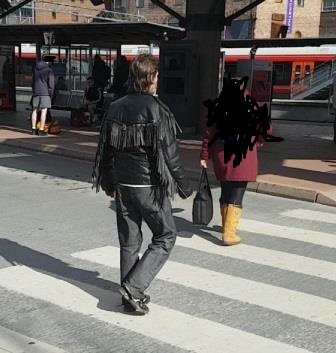
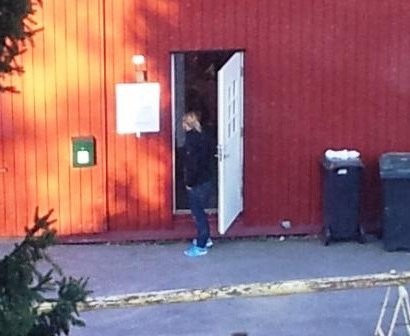 |
Kvinnelig politibetj. som driver ulovlig
ved det
|
Ulovlig overvåking - EOS
 Bildet
viser fra et sykehus i Asia.Moren som er oversykepleier
og datter(17-18 yo? ). . Moren er veldig interresert i
fitnes dance gymnastic fordi det muligens kan
Bildet
viser fra et sykehus i Asia.Moren som er oversykepleier
og datter(17-18 yo? ). . Moren er veldig interresert i
fitnes dance gymnastic fordi det muligens kan
brukes i morgen gymnastic og generell gymnastic på
sykehuset.De vil gjerne se demonstrasjon av fitnes dance
gymnastic til cool dansemusikk.Når jeg dancer naken
Så er det fordi underbuksen ( dressmann ) har dårlig
strikk og stadig glir ned.Og når jeg kanskje retter opp
penisen min når jeg danser er det fordi fohuden på
penisen min ble ødelagt den gang jeg var 3 år gammel i
barneveognen.Av de 3 unge jentene på brattlikollen
(nutte,vera og tonje).Men datterenn er veldig ung ja.
Når jeg senere skal dra med bussen for å handle oppdager
følgende monster perverse grisesminkede person( dok
) kommer til bussholdeplassen.
 Hvordan kan hun vite at jeg er?
Senere når jeg kommer til rema 1000 på nesbru oppdager
jeg følgende Monster kriminelle perverse reptil
politikvine også kommer å handler der.
Pervert
criminal female mafia doing spy and provocations
using horse:
twitter
.Purpose Vampyr
crim.(dok
) and property robbery.Obvious coop
pervert criminal police:
Torgeir Lindtad, Marie Benedicte Bjørnland++++.
And ordfører Lene
Conradi ( H ).
 |
 |
|
|
 kannibalisme kannibalisme |
 Bilde gjengitt med tillatelse fra H-A (gv):hmm ligner kannibal politimannen ( hamar ) på noen ved Sandvika Politistasjon? |
Dokumnetasjon :
barnevern . Politi som fryder seg ja( hun ene
smiler) : "Hun tok vi fint ja , hahah (reptil humor)"
Når jeg kommer hjem oppdager jeg at alle dancevideoene
videoene mine er lagt ut på twitter.videoene er laget med
google chrome browser
Som kan gjøre video opptak av all browser surfing fullt
lovlig.
Når jeg kommer hjem oppdager jeg at alle fitnes-vidoene
mine er lagt ut på twitter.Hmm finner ikke igjen dagen
etter. er ikke så god
på på twitter.
Men åpenbart at det er her er begått alvorlig kriminell
overvåking av internett-surfing.Ansvarlig er Kripos , og
EOS-utvalget som holder til
i samme bygg.
Tanum-platået
, mer om husmannsplassen Stokkerbråtan:
 androchrome.... androchrome.... |
 Boni-eiendom som ulovlig bygde vei til husmannsplassen i skogen |
Monica Mæland + Terje Nybøe :
Twitter
Twitter - Androchrome bilder, bla.a NHO / Kristin Skogen
Lund :
Twitter Html
collection : andros.htm
Hmm Normarka grenser til
hakadalen i øst.Der ligger Hakadalen Golfklubb på
Aas Gaard, den
grenser til Nannestad skogene på østsiden av
Hakadalen. Gården eies av Skipsreder famile
Fearnly.Proff: Nils Thomas Fearnley. Og Nils Olav
Klaveness, eier av halvpart av ringi gård i
Bærum , også har forbindelser til Hakadal Golfklubb.
Hans
Kristian Gaarder : Min Fb-diskusjonsvenn
fra Hadeland er nå funnet død.Han var en
vaksine motstander og sannhets søker.( 22.juli
bla.a ).Siste fb-diskusjon var om Oven-
stående tekst.Om
Christen Sveaas og Carl
Otto Løvenskiold
bla.a..Siste jeg
ville diskutere
var Jaren
drapet hvor
Politi/Delta-gruppen
var involvert.Hmmm
kan være typisk
Løvenskjold
metoder.(Historisk
om gamle
adelslekter og
metoder).Og jeg
fortalte; det var
Christen
Sveaas som fant
skipsreder
Willhelm
Willhelmsen ( dok
) ,etter at han
hadde skutt seg i
hodet.
Hmm Ari Behn ble
også funnet drept
i Lommedalen.Var
det kanskje i
bakhodet han skjøt
seg selv.Sist han
leste min chat var
30 mars. Han
fortlate aldri han
følte seg dårlig
EOS / Kripos :
 Kripos sjef : Kristin Kvigne |
 Svein Grønnern Astri Aas-Hansen Øyvind Vaksdal Eldfrid Øfsti Øvstedal |
 Står i alle aviser over
hele verden !!!!!!!
Leser bl.a at Oslo
Politets twitter konto ble blokkert.hmmm.Oppmerskom på at alle
ip-adresser til mulig kriminell ulovlig opp/ned lasting av
private danse-videoer er lagret.
Står i alle aviser over
hele verden !!!!!!!
Leser bl.a at Oslo
Politets twitter konto ble blokkert.hmmm.Oppmerskom på at alle
ip-adresser til mulig kriminell ulovlig opp/ned lasting av
private danse-videoer er lagret.
Det
samme
skjedde med Gusta , bestemoren til Anne Grete
(stor-nazist) egentlig fra Gisle gård i Vollen.
Idag finner man Søndre Gisle gård på kartet ja.
Lenger Nord ser man et mystisk sted ved
Øgårdsveien. Her er det også vanskelig å gjøre søk
både på google earth og gule sider.
Leste om noe hagetjester der
: Twitter.
I et av de
tilhørende husene, bor en person med
navn Trond Berger. < Twitter
>. Eieren
av blommenholm industrier.
En annen
person med opplagt tilhørighet ,er
den før beskrevne Politi narko
selgeren Alex . Dok < Twitter
>.
Nevner
at tidl. politi
inspektør Torgeir
Lindstad delvis er
nabo med dette
lugubre narko /
vampyr stedet.
Nevner
også også
tidligere AP-leder
i Asker; Ole Willy
Sandbekk.Tidligere
kollega av jens
Stoltenberg:

Etter
at han sluttet
som leder i
Asker Ap begynte
han å jobbe
Vollen . Han er
åpenbart
muligens nå
ivolvert med
lugubre ting
der,
i forbindelse
med Sjøstrand
Gartneri . (
observasjoner
Asker sentrum )
.
Nevner
også rett etter
innkjøring
sjøstrandveien,
like før
gartneriet ,så bor
det en frimurer
ved navn Svein
Ørbeck ( Ørbeck
Consulting ).
Åpenbar kjenskap
muligens?

Anmeldelse
spesialenheten (avventer
bildefil)
Saken gjelder hesteridning på Hvalstad
gård i ASKER, som politikvinner har vært med, og
div.politi sammarbeidet
om, og også grovt skadeverk på hageplanter med
ålantegift.Og også at de har samarbeidet medmin brors
kone
Frauke weber Jøsang.
Dok : https://www.pstpsycho.no/asker-mafia.html
, les nederst ,
om Frauke weber Jøsang : https://www.pstpsycho.no/sikkerhet.html
(Om kannibalisme kan man eks. nevne frimurerkjøkkenet på
hamar, og like ille barnedrap , kan eks nevnes lobben
saken(intil motsatte
er bevist).
Vampyr-kriminalitet er også kannibalisme Jmf eks kirkens
bymisjons nana-marie senter på Nordtstrand og barnetyveri
saken der.
omtrent smtidig som Stordalens haloween selskap I Gimle
parken.)
Elinor
Bauer Storkaas - from search Brusetfaret
Vampyr in Norway.telecat.
The
other woman on the vampire adress is Siv C.
Bauer. Here in 1 pic from her Fb, with some
extra text + "?".
In
1 other house in Brusetfaret, 1 famous
earlier icehockeplayer named Marius Fredrik
Voigt.He obvius coop with g horse mafia ,
From Vampyr district Vollen; Sjøstrand
gartneri. Marius local club was frisk/Asker.
icesport hall was askerhallen. 3km- from
the gartneri. red roses++
1
woman also that house . Maybee emilie gjølme
voigt, finansklagenemda. Very active in
monster pervert police provo chat at
discord,
babygirl. Lesbian "pervo" sex with "frida"
from gausdal.
Rem
1 discord chat me joking them they go top
bar in choice hotell and have some double
"bloody-XXXX" drink.
Financed by seized police narco from
innocent teenagers at Asker train statin
"Kim",son
of police man ,was in chat.Hi from Kolbotn
but was killed.Reputation kim was killed in
acid bath.
Some other police officers also borrow Kims
nick and was in chat. In newspapers read 1
police man and his wife dead.
Cos they kill each other in appartemet in
Kolbotn
Mention
again chat g frida from Gausdal, close
ol-city Lillehammer.Fåvang down in Valley
also that.Fåvang was the last chat group
Astri hetlesæter from Austervold island
was active in, before she disapear.Maybee
sold as underage sex-slave to Heidelberg
by the Rhine, Germany.
Mention
neigbour,same house. 1 woman with name
Sandra Elisabeth Ekornrud have adress,
Obvius she also coop wit the monster
criminal vampire mafia sjøstrad/vollen. She
is board member At Asker Sport foundation
and work Nurse in Asker. Maybee involved in
extreme key/locker crime
HÅKON BERG KOLSRUD is a hospital & health care company based out of Erlands vei 4, VETTRE, Asker, Norway.
